Crown thinning
Selectively removing interior limbs so wind passes through the canopy instead of pushing against it. The single most useful cut for storm season on dense shade trees.
Tree trimming and pruning in Port St Lucie: why it matters before storm season, what proper cuts look like, and how our climate changes the schedule.
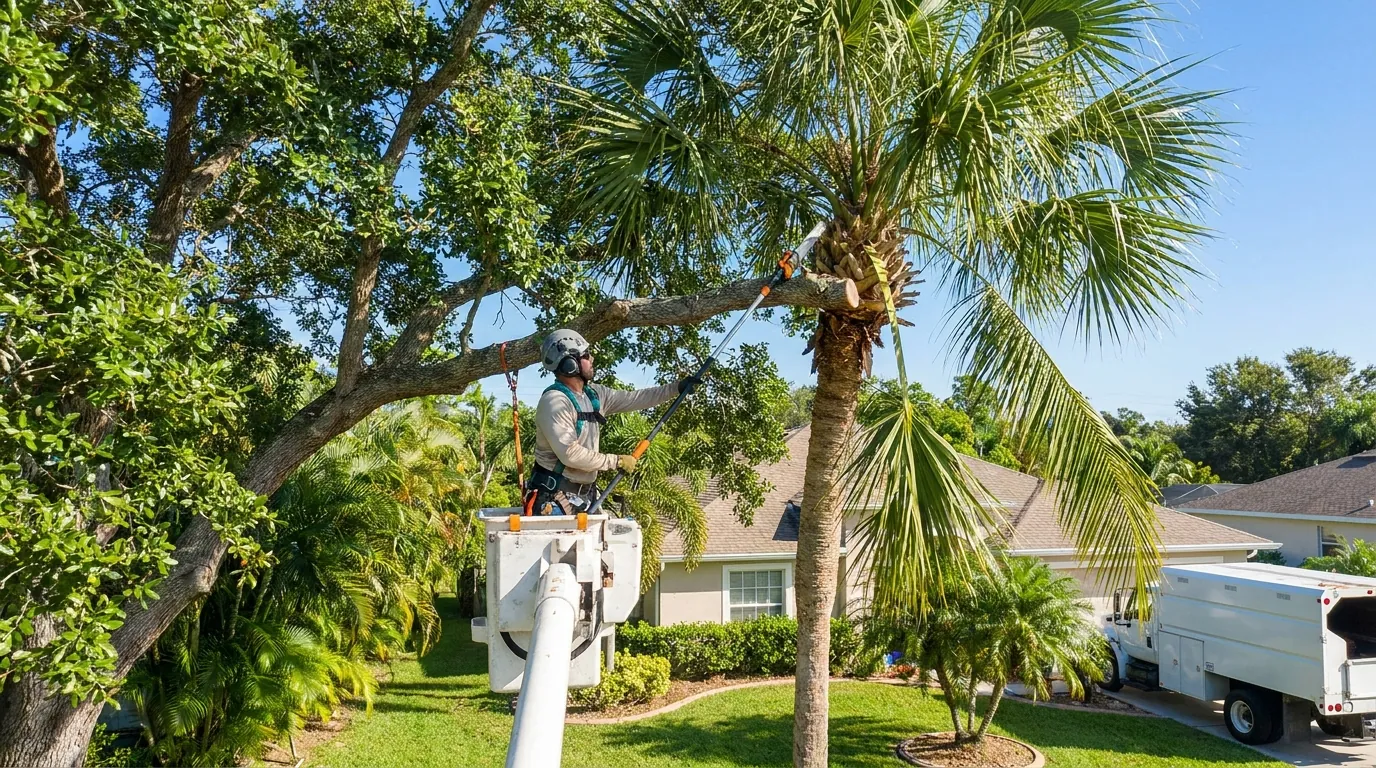
Trees grow fast in our heat and rain, and that growth is not always balanced. A canopy that gets dense and top-heavy catches wind like a sail — exactly what you do not want when a summer storm rolls through. Good trimming is less about shape and more about structure: thinning the crown so air passes through, removing dead and crossing limbs, raising low branches off the roof and driveway, and reducing weight on long, overextended limbs before they tear out.
Done right, trimming extends a tree's life and lowers the odds of a failure that forces a tree removal later. The difference between a healthy prune and a bad one shows up for years — this is where the right cuts matter.
Different trees and different goals call for different cuts. Here is what that looks like.
Selectively removing interior limbs so wind passes through the canopy instead of pushing against it. The single most useful cut for storm season on dense shade trees.
Lifting the lowest branches to clear your roof, driveway, walkway, or line of sight — common on laurel oaks that overhang Port St Lucie homes.
Taking out dead and dying limbs before they drop. Humidity and fungal activity here mean deadwood accumulates faster than many homeowners expect.
Shortening long, heavy limbs to reduce leverage. This protects weak branch unions — a frequent failure point on fast-growing species.
Removing dead fronds and spent seed stalks without over-trimming. Hurricane-cutting a palm down to a few fronds actually stresses it and is best avoided.
Keeping limbs off the house, fence, and utility drops so they don't abrade the roof or become a path for pests and storm damage.
In Port St Lucie, the best window for most structural trimming is the drier, cooler months before hurricane season ramps up — roughly late winter into spring. Thinning a canopy ahead of June means storms meet a tree that moves with the wind instead of fighting it. Dead and hazardous limbs, of course, come off whenever you spot them.
Our sandy soil and high humidity also push growth hard, so trees that were trimmed last year often need attention again sooner than northern homeowners are used to. Over-trimming is a real risk in this climate: cutting too much at once forces a flush of weak, water-sprout growth that is more storm-prone, not less. We take enough to improve structure and airflow and no more. If a tree is declining rather than just overgrown, a tree health assessment is the better first step.
Whether it's one oak over the roof or a yard full of trees before storm season, we'll walk the property and tell you what actually needs cutting.
Serving Port St Lucie and nearby Palm City, Stuart, Jensen Beach, and Fort Pierce.
Most fast-growing shade trees here benefit from structural trimming every two to three years, sometimes sooner because of our long growing season. Palms and trees over structures may need lighter annual attention to stay clear of the roof.
Late winter through spring is ideal for structural thinning, so the canopy is open and lighter before June storms arrive. Dead or hazardous limbs should be removed whenever you notice them, regardless of season.
No. Stripping a palm down to a few upright fronds stresses the tree, slows its recovery, and can leave it weaker. Proper palm pruning removes only dead fronds and seed stalks.
Sometimes. If the trunk and roots are sound and only the canopy is the problem, pruning may solve it. If there's decay, a serious lean, or root issues, trimming won't fix the underlying hazard and removal may be the safer call.