Overgrown vacant lots
Parcels that have gone years without attention, now thick with invasive pepper, vines, and scrub. We cut it back, remove the debris, and leave the ground open and walkable.
Lot and brush clearing in Port St Lucie for overgrown parcels, build sites, and post-storm cleanup. What's involved, costs drivers, and next steps.
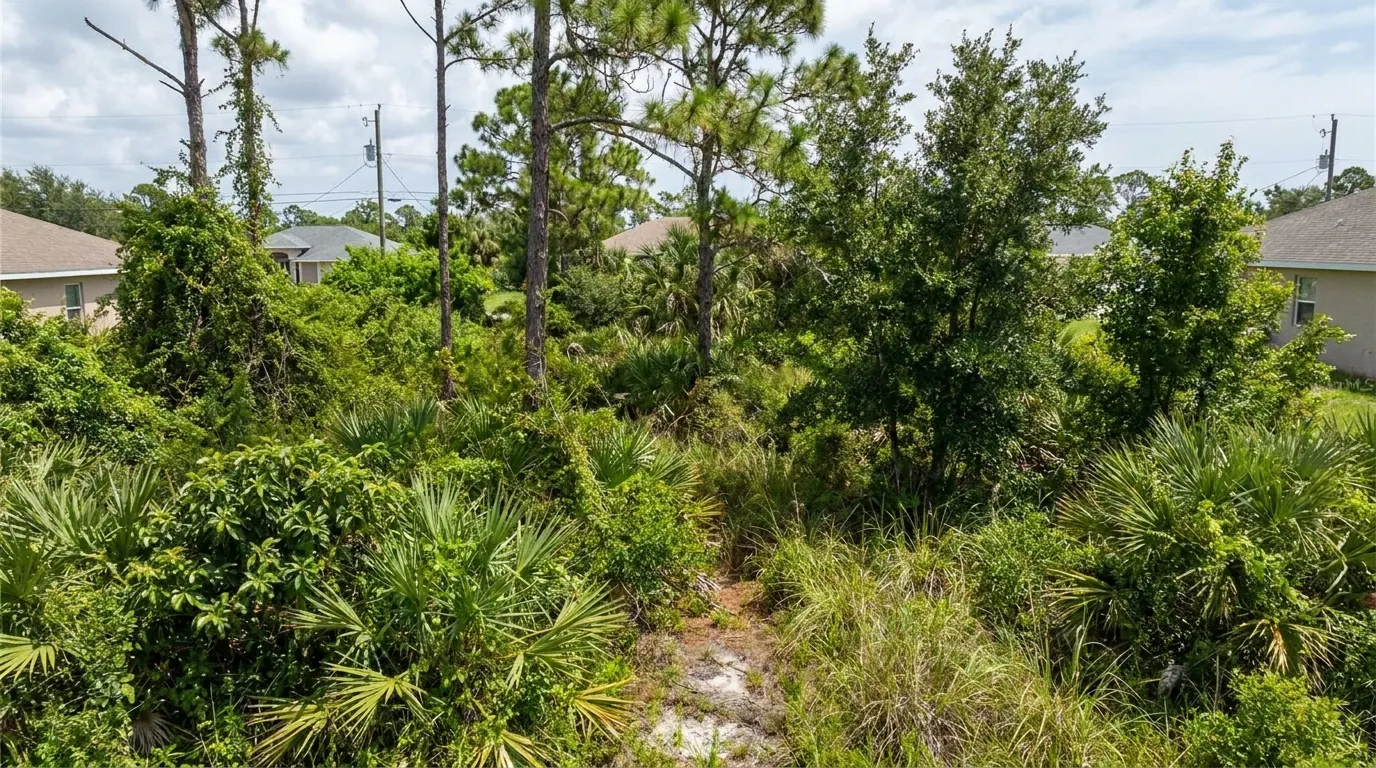
Port St Lucie grew up around a grid of large platted lots, many of which sat empty for years before anyone built on them. In our climate, an untouched parcel does not stay open ground for long. High humidity, frequent rain, and a long growing season turn a vacant lot into a tangle of Brazilian pepper, cabbage palm, oak scrub, vines, and underbrush within a few seasons. Clearing it back to something usable is its own kind of work.
Homeowners and owners call for lot and brush clearing for a handful of reasons: preparing to build or fence, opening sightlines, reducing fire and pest habitat near the house, clearing an overgrown back section, or cleaning up after a storm has knocked down trees and left a field of broken limbs. Each of those jobs looks different once you are on the ground.
What they share is the local challenge of sandy soil and a high water table. Low spots on a Port St Lucie lot hold water through the wet season, which affects where equipment can go and how debris is staged. Good clearing accounts for that instead of fighting it.
Clearing covers a wide range. These are the situations we see most around Port St Lucie.
Parcels that have gone years without attention, now thick with invasive pepper, vines, and scrub. We cut it back, remove the debris, and leave the ground open and walkable.
Clearing a footprint for new construction, a shed, a pool, or a fence line. This often includes removing small trees and grinding stumps so the ground is ready for the next trade.
Thinning heavy brush and removing dead material close to a structure reduces fuel and cuts down on the pests and snakes that thick undergrowth attracts in this climate.
After a storm, downed limbs and broken trees pile up fast. We clear the debris, cut down what is damaged beyond saving, and haul it out.
Most clearing jobs start with a walk of the lot to find property lines, note the trees worth keeping, flag any low wet areas, and locate anything buried — septic components, utilities, old irrigation. From there the crew works in passes: cutting and dropping the overgrowth and small trees, stacking or chipping the brush, then grinding stumps where the ground needs to be clean. Larger specimen trees that have to come out are handled as tree removal with proper rigging rather than just pushed over, which protects the surrounding ground and anything you want to keep.
The biggest cost drivers are how thick and tall the growth is, how many trees and stumps are involved, how wet the ground is, and how much debris has to be hauled off versus chipped on site. A lot that is mostly light brush clears quickly; one full of mature Brazilian pepper and saturated low ground takes longer and more equipment. Access matters too — a back lot with a narrow entrance limits what machines can reach it.
If you are clearing to protect your home rather than to build, it can be worth pairing the work with a tree health assessment of the trees you plan to keep, so you are not clearing around a tree that is itself a hazard. For ongoing upkeep once a lot is open, periodic tree trimming keeps the remaining canopy from crowding back in.
Tell us the size of the parcel, what's on it now, and what you want it to become. We'll walk it with you and lay out a plan to get it back to usable ground.
We work across Port St Lucie and the nearby Treasure Coast communities.
Either. Some owners want a full parcel opened up for building, and others just want a section cleared, sightlines opened, or a fence line cut. We mark out what stays and what goes before any cutting starts.
That depends on what you want and what the lot can hold. Brush is often chipped on site, while larger trunks and heavy material are usually hauled off. We'll go over the options when we walk the lot, since hauling affects the cost.
Usually, but it changes the approach. Port St Lucie's high water table leaves parts of many lots soft through the wet season, so we plan equipment paths and debris staging around those spots to avoid rutting the ground or getting machines stuck.
Yes, when the ground needs to be clean for building, fencing, or mowing. Where stumps can stay, we can leave them, but for most prep work grinding them down is part of getting the lot usable.