Stump Grinding in Port St Lucie
Stump grinding in Port St Lucie: why stumps become a problem in sandy soil, how grinding works, how deep we go, and what to do with the space after.
Why that stump should come out
A stump left behind after a removal is more than an eyesore. In Port St Lucie's warm, wet climate, a cut stump is an open invitation: termites and carpenter ants move in, fungi break down the wood, and many species — especially laurel oaks and invasives like Brazilian pepper — send up persistent suckers that keep trying to regrow. A stump in the middle of a lawn is also a mower hazard and makes it impossible to lay sod, build a patio, or plant something new in the same spot.
Grinding is the clean way to deal with it. It turns the stump and major surface roots into mulch below grade, so the ground can be reclaimed. Grinding usually follows a tree removal, but we also grind old, weathered stumps that have been sitting for years.
How stump grinding works
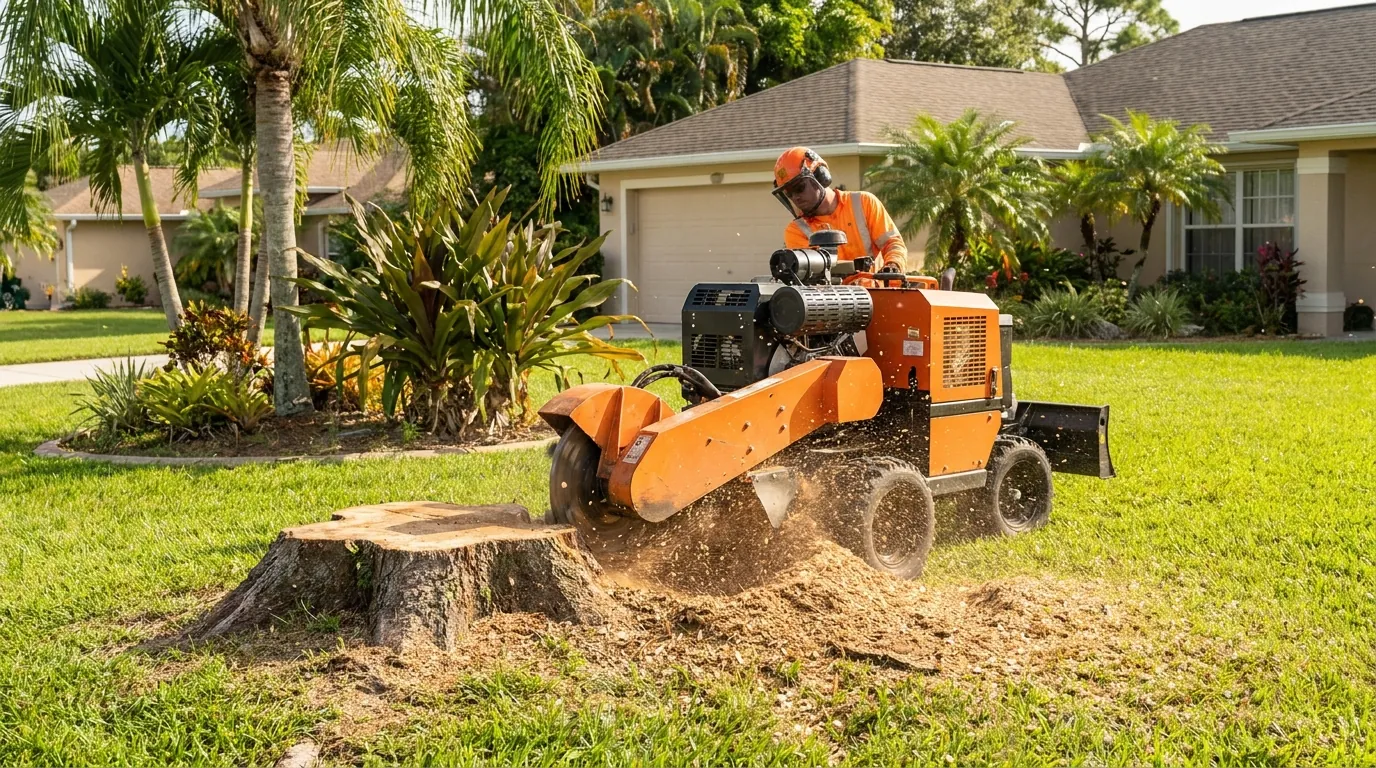
A stump grinder uses a rotating cutting wheel to chip the wood away in layers, well below the soil line.
-
Clearing and marking
We clear rocks and debris around the stump and check for sprinkler lines and any marked utilities. Sandy fill in local yards sometimes hides irrigation pipe close to the surface, so this step matters.
-
Grinding the stump
The cutting wheel works across the stump, reducing it to chips. We typically grind several inches below grade — deeper if you plan to replant a tree or lay a hard surface.
-
Grinding surface roots
Large roots flaring out at the surface are ground down too, so they don't trip people, buckle sod, or resprout.
-
Backfill and cleanup
The grindings make a mulch that can be left to settle the hole, raked level, or hauled off if you want clean fill brought in instead. We leave the area tidy.
Local factors and what comes next
Our sandy soil is actually friendly to grinding — it's loose, so the wheel moves through the root zone easily, and there's less rock than in many regions. The trade-off is that stumps and roots decay quickly in the humidity but don't fully disappear, and they can keep feeding sprouts and pests until ground out. The high water table means a ground-out hole can collect water for a day or two after heavy rain, which is normal; it drains as the sand does.
Once the stump is gone, you can sod right over the spot, plant grass, or set a new tree a few feet away from the ground-out wood. If you're removing a stump because the tree failed and you're worried about the ones still standing, pairing the work with tree trimming on the remaining canopy is a sensible way to get ahead of the next storm.
Get your stumps ground out in Port St Lucie
One stump or a whole lot's worth — send us the location and rough size and we'll give you a straight quote.
Serving Port St Lucie, White City, Indian River Estates, and nearby Treasure Coast towns.
Frequently asked questions
How deep do you grind a stump?
Typically several inches below grade for a standard lawn finish, and deeper — often eight inches or more — if you plan to replant or lay a patio. We adjust based on what you want to do with the space afterward.
Will the tree grow back after grinding?
Grinding the stump and the main surface roots removes the tissue that sprouts, so regrowth from the stump stops. Aggressive species can occasionally push suckers from far-running roots, but grinding ends the stump itself as a source.
What happens to the hole and the wood chips?
Grinding leaves a mix of wood chips and soil you can use to backfill and settle the hole, or we can haul the grindings away and you bring in clean fill. The spot can be sodded or planted once it's leveled.
Can you grind an old stump that's been there for years?
Yes. Weathered stumps often grind easily because the wood has softened, though older root systems in sandy soil can still run wide. We can handle both fresh stumps after a removal and ones that have sat for years.