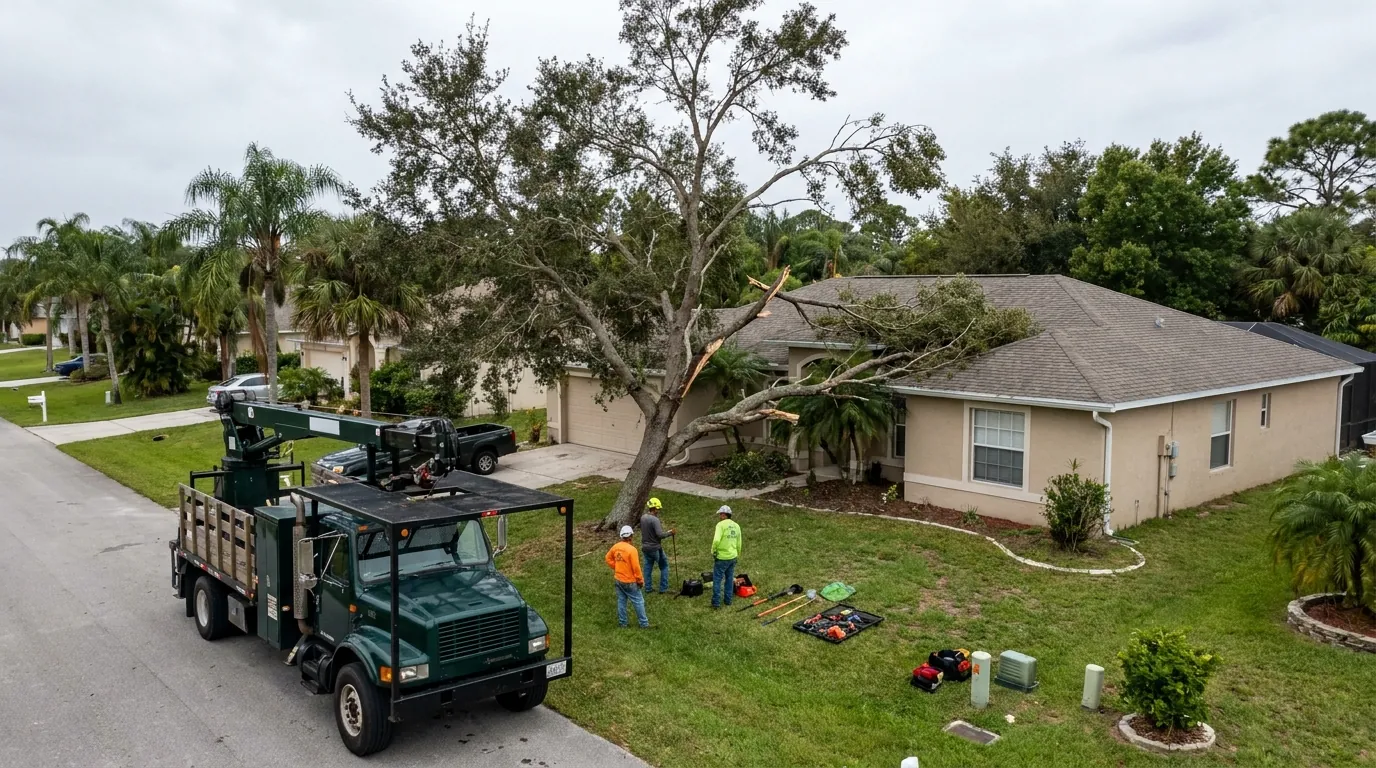
The first step on arrival is assessment, not cutting. The crew looks at which way the tree wants to fall, where the stored tension is, whether the roots are still holding, and what is underneath — gas, water lines, the roof structure, the neighbor's fence. In Port St Lucie's wet-season storms, the ground is often still soft, so machines and anchor points have to be chosen with that in mind.
From there the tree usually comes down in controlled pieces. Rigging lines and strategic cuts let the crew lower sections instead of dropping them, which protects the house, the pool cage, and the landscaping. A tree already loaded against a structure is released gradually so the weight does not shift all at once.
Once the hazard is removed, we clear the debris and can grind what is left. If the root system was compromised but the tree is still up, the right next step may be a full tree removal rather than patching it together. If the tree survived with damage, a tree health assessment helps you understand whether it is worth keeping. For storms that took down fencing and brush along with the tree, lot and brush clearing handles the rest of the mess.