Serving Port St Lucie, FL Call us: (772) 320-5492

After removal, what goes back

Taking a tree out often leaves a gap you'll want to fill — for shade, privacy, or curb appeal. This page covers installation: choosing a replacement that suits Port St Lucie's conditions and planting it so it establishes well rather than struggling from day one. Good species choice here is the difference between a tree that shrugs off storm season and one that becomes next year's removal.

Replanting usually follows a removal, so it pairs naturally with our tree removal service. If the tree you lost was damaged rather than dead, it's also worth checking whether repair was an option first — our tree removal repair page walks through that decision.

The wrong tree in the wrong spot is a slow problem: roots that chase drainfields, a canopy that outgrows the space, or a species that can't hold in sandy soil. We plan around those from the start.

What installation includes

Planting is more than digging a hole — especially in loose local soil.

Species selection

Matching the tree to the site: mature size, root habit, salt and wind tolerance near the coast, and how it handles the wet-and-dry swings of a high water table. The right choice avoids future conflicts with structures and utilities.

Site and stump prep

Clearing old roots or a ground stump, checking drainage, and improving the sandy planting zone so a young tree has something to hold and feed on while it establishes.

Proper planting depth

Setting the root flare at the correct height matters most in fast-draining sand, where planting too deep or too shallow both stress the tree. We backfill and firm the soil to remove air pockets.

Staking and mulch

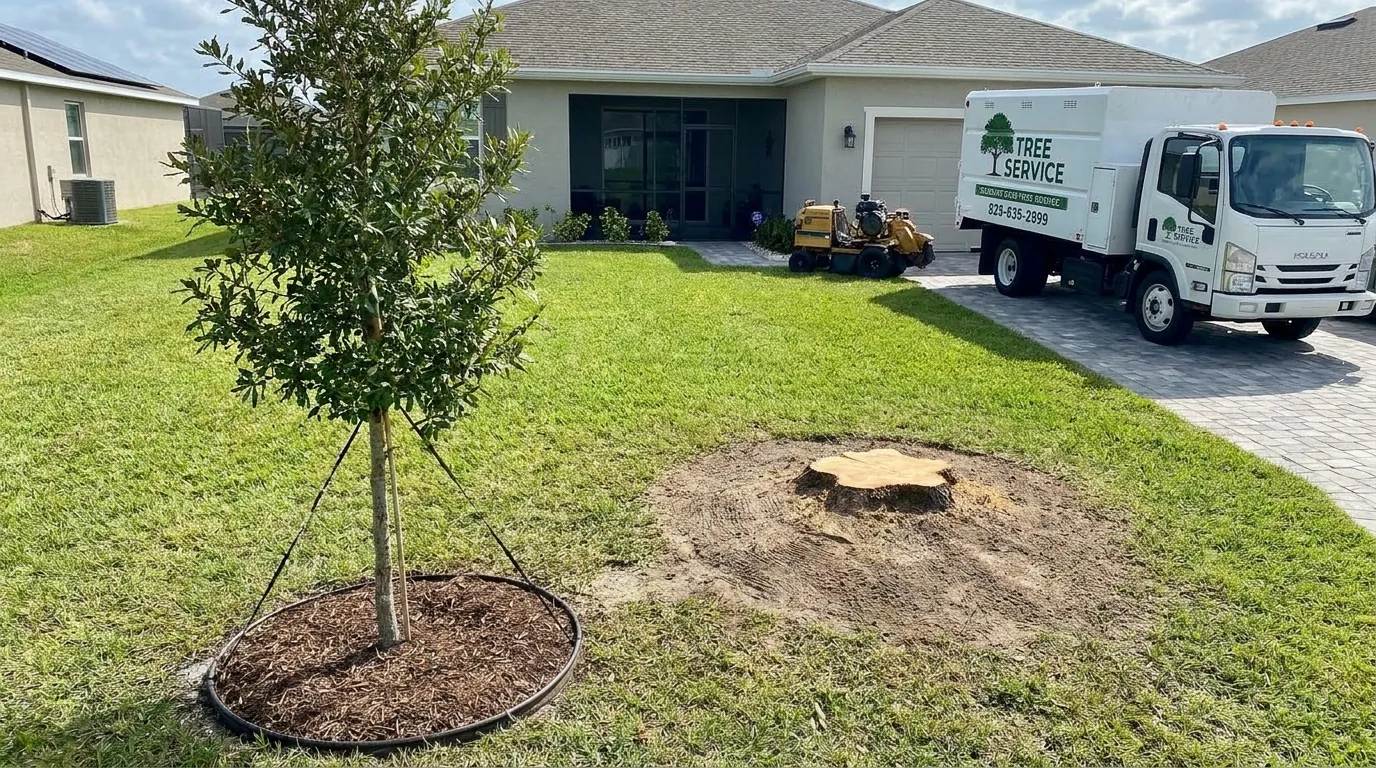
New trees in sandy ground and Treasure Coast wind often need temporary staking to anchor while roots take hold, plus mulch to hold moisture that would otherwise drain straight through.

The replanting process

A typical installation runs like this.

  1. Pick the spot and species

    We look at sun, spacing from the house and drives, nearby utilities, and drainage, then recommend species that will thrive without becoming a hazard later.

  2. Prepare the ground

    Old stump and root material is cleared, and the sandy planting area is loosened and amended so a young root system can establish.

  3. Plant at the right depth

    The tree is set with the root flare at grade, backfilled, and watered in to settle the soil around the roots and drive out air pockets.

  4. Stake, mulch, and set a watering plan

    We stake if the site needs it, mulch to conserve moisture in fast-draining sand, and explain the early watering that new trees here depend on.

Planting for local soil and storms

Port St Lucie's sandy soil drains fast and holds little water or nutrient, so a new tree needs help getting established. Mulch, thoughtful backfill, and a real watering schedule in the first months make the difference — without them, young roots dry out between rains even in a wet climate. The high water table cuts the other way in the rainy season, when the same soil can stay saturated, so species that tolerate both extremes are the safe bet.

Storm season shapes species choice too. Trees with deep, spreading roots and a habit of not becoming top-heavy stand up better to Treasure Coast wind than fast, brittle growers. Planting far enough from structures and drainfields also spares you the root conflicts that lead to removals down the line — the same conflicts our tree removal service exists to solve.

Fall and the cooler, drier months are often the best planting window, giving roots time to establish before the next summer's heat and storms. If you're planning a removal and a replant together, contact us and we can look at both in one visit.
Frequently asked questions

What trees do best in Port St Lucie's sandy soil?

Species with deep, wind-firm roots and tolerance for both fast drainage and seasonal saturation do best. We recommend based on your specific spot, spacing, and how much wind and salt exposure it gets.

When is the best time to plant a new tree here?

The cooler, drier months are generally ideal, letting roots establish before summer heat and storm season. Planting is possible year-round with proper watering, but timing gives the tree an easier start.

How far from my house should a replacement go?

It depends on the mature size and root habit of the species. Choosing the right tree and setting it a safe distance from structures, drives, and drainfields prevents the root conflicts that cause future removals.

How much watering does a new tree need?

More than people expect in sandy soil, which drains quickly. New trees need regular deep watering through their first establishment period, and we set out a simple schedule when the tree goes in.

Talk to someone about your job

Call to describe the problem and get a quote for work in Port St Lucie, FL.